Hadfield steel comes out of the foundry austenitic and relatively soft. The shock wave transforms it: it deforms the crystal lattice in depth, compacts it and hardens it, without making it brittle and without changing the geometry on the drawing.
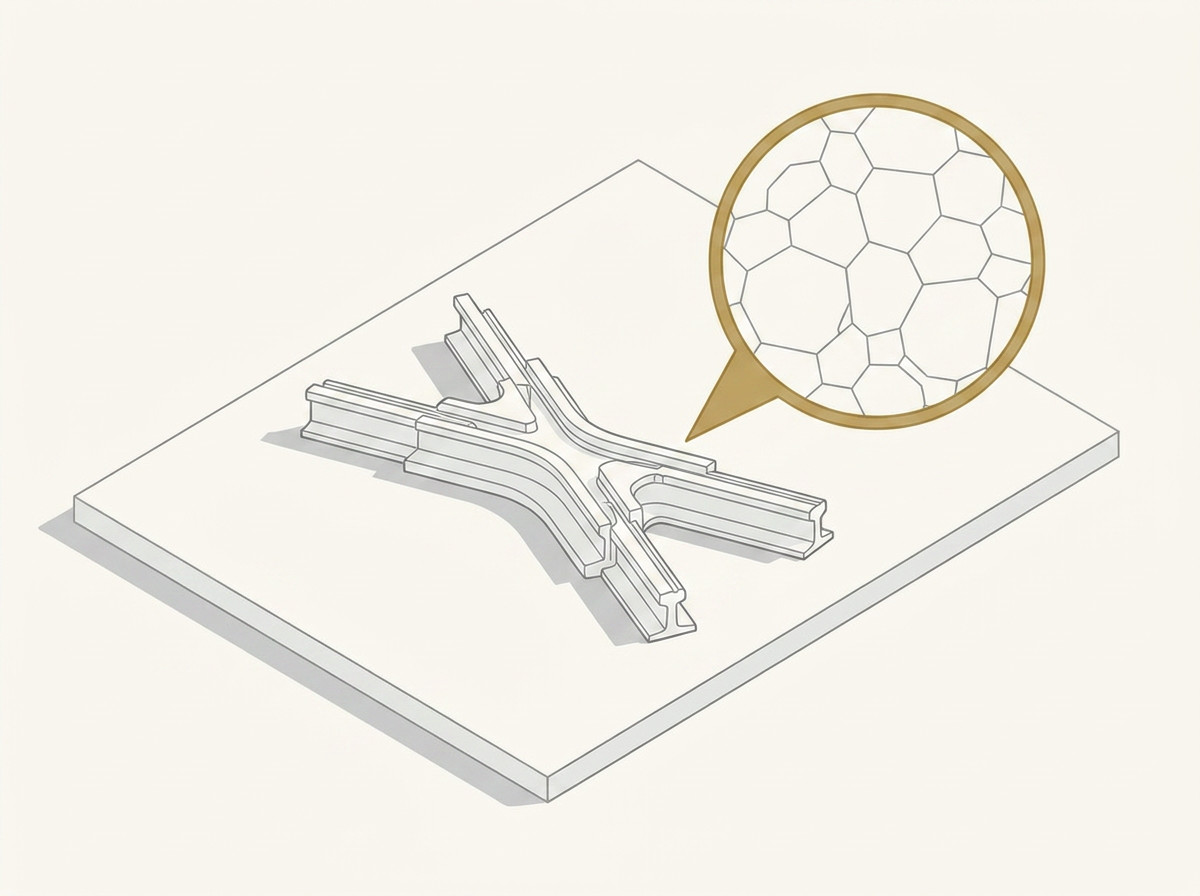
The frog leaves the foundry in 12–14% Mn Hadfield steel: austenitic and tough, but soft, around 200 HB. Its grain is coarse and open.
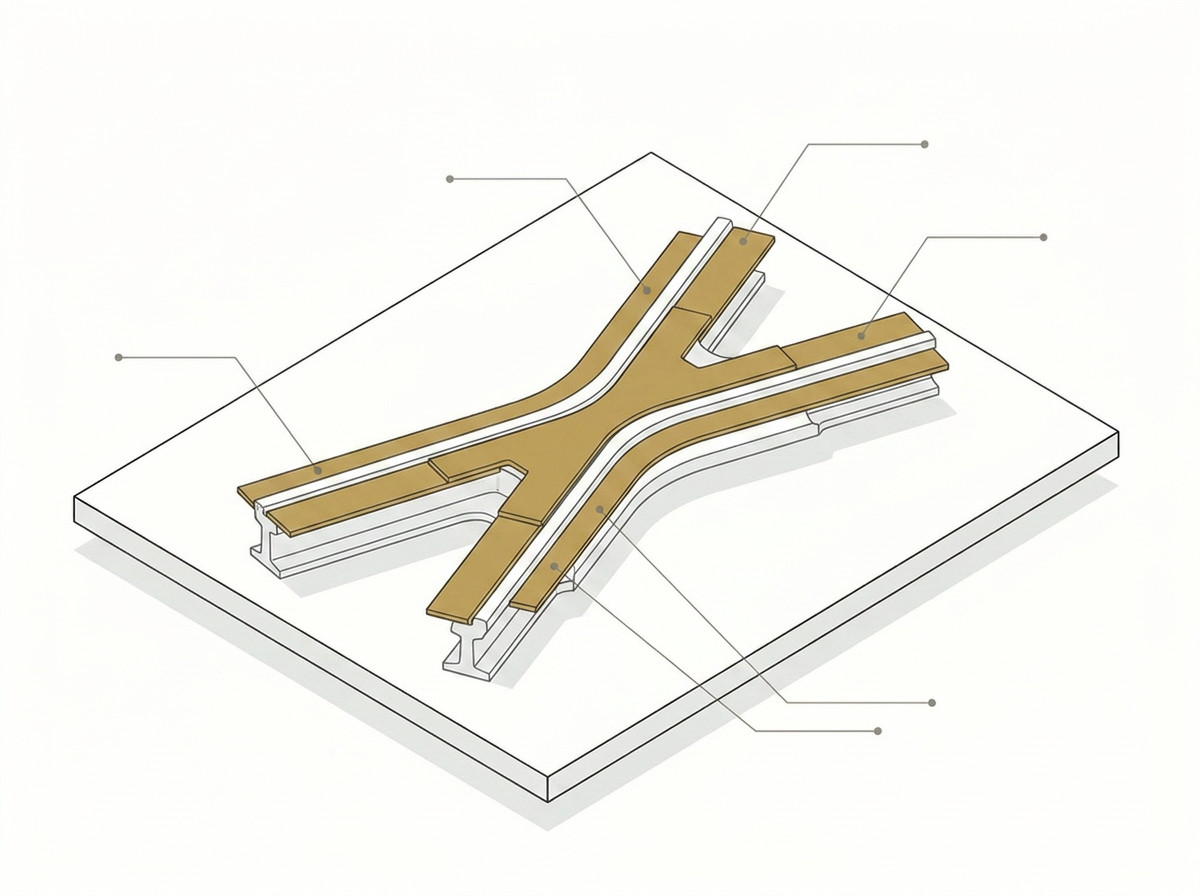
The running surface is prepared and the charge is placed on the point, throat and impact face: exactly where the wheel strikes.
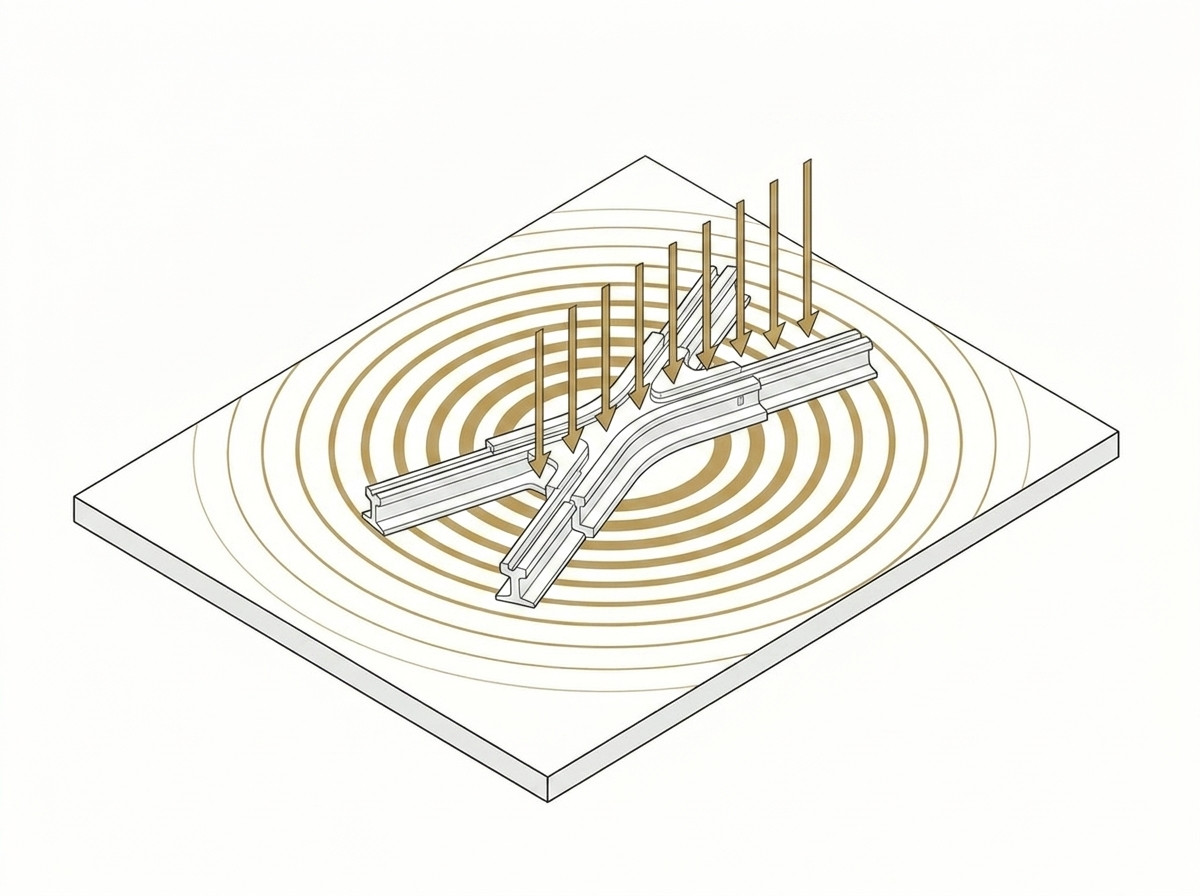
The detonation delivers several gigapascals of pressure. The wave enters the metal and deforms the crystal lattice in depth.
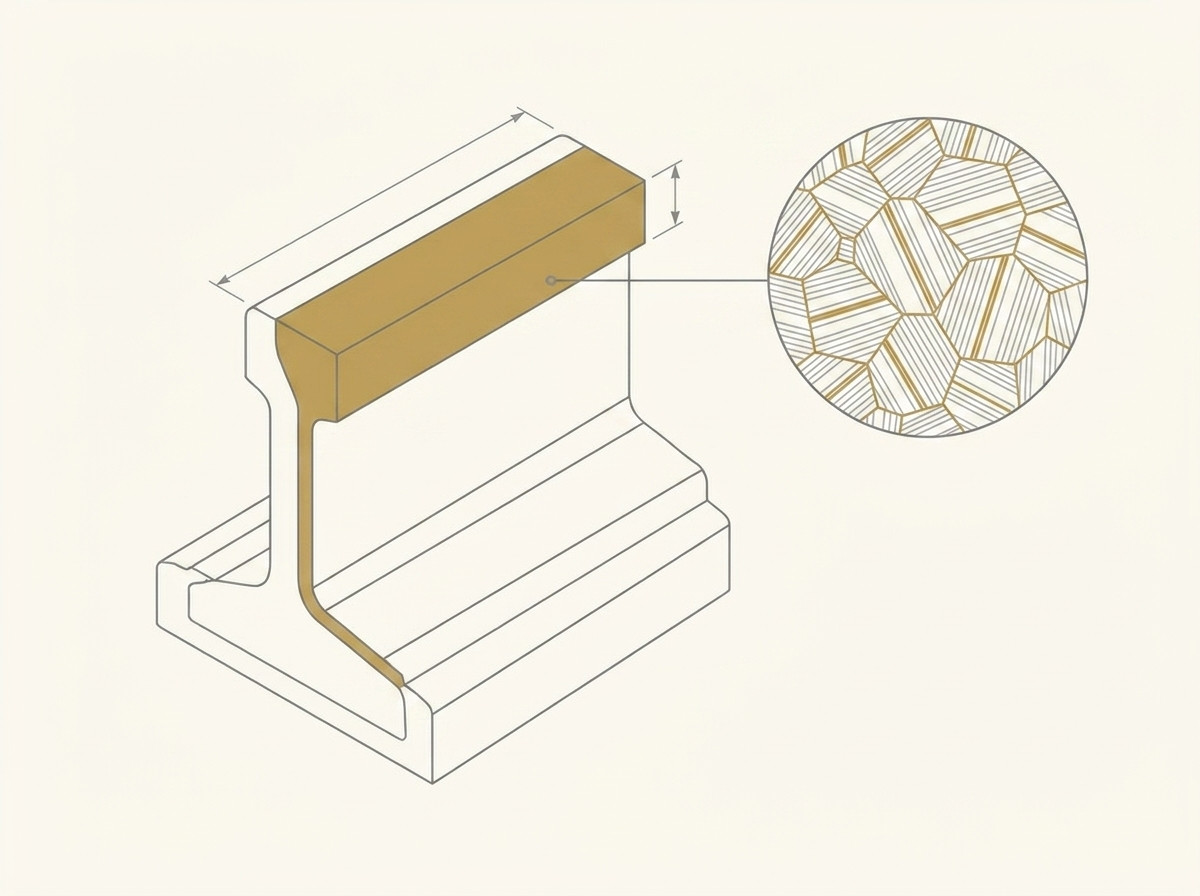
The grain fills with twins and compacts: 450–550 HB to a depth of ≥20 mm. Hard on the outside, tough on the inside.
Built-in quality control
The shock wave reveals any hidden microcrack or pore from the casting: if a part has an internal defect, the test brings it out before it reaches the track. Harden and verify in the same step.
Three shots per part · per ASTM A128 and AREMA